
16 October 2026 · Tent Ideas · WT tent
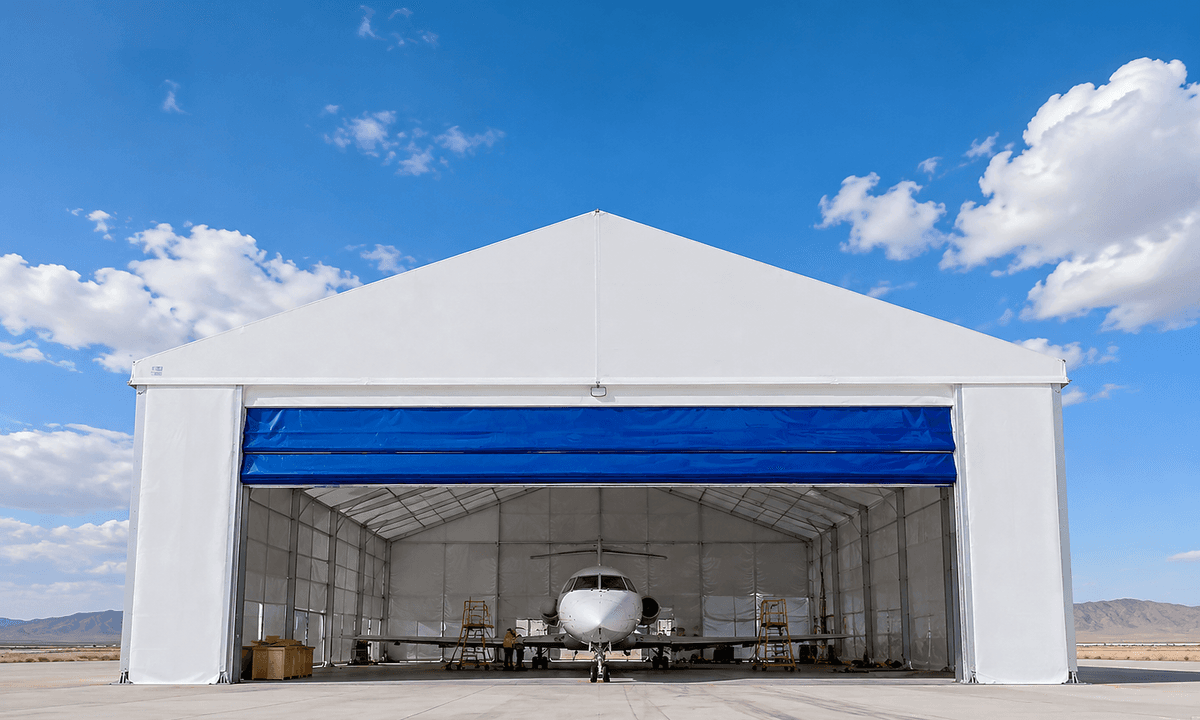
When researching prefabricated hangar tents, many general aviation bases and helicopter operators are primarily concerned with service life and material safety. Some clients mistakenly assume that such tents are merely short-term, temporary structures with a limited lifespan. In reality, a hangar tent consists of two main components—an aluminum alloy primary framework and a PVC membrane enclosure—each with its own distinct service life. Furthermore, the membrane’s resistance to wind and snow, as well as its flame-retardant properties, are critical safety factors for environments where aircraft are stored or maintained.
Overall Service Life of Hangar Tents
The main structure of a hangar tent consists of a 6081-T6 aluminum alloy frame, which can last for 20 to 30 years, provided it is installed according to specifications and maintained regularly. The aluminum alloy features a natural protective oxide layer, making it highly resistant to corrosion. Its modular design allows for disassembly and relocation, enabling reuse when project requirements evolve. Even if the membrane material eventually ages, the frame remains intact, significantly reducing the cost of future reinvestment. The PVC membrane acts as a consumable enclosure; its service life is influenced by factors such as ultraviolet (UV) radiation, precipitation (rain and snow), and exposure to salt spray. Standard PVC fabric typically lasts 5–8 years, while specialized, thickened, UV-resistant PVC membranes designed for hangars can last 8–12 years. In regions with high salt spray (coastal areas), intense sunlight (northwestern regions), or prolonged snow accumulation (northern regions), the aging process of the membrane material may accelerate, necessitating the selection of higher-specification materials. Reaching the end of its service life does not mean the membrane will fail or tear instantly; rather, it typically manifests as degradation of the coating or a reduction in material strength, at which point the membrane fabric can simply be replaced.
Key Performance Characteristics of PVC Membrane Material for Hangar Tents
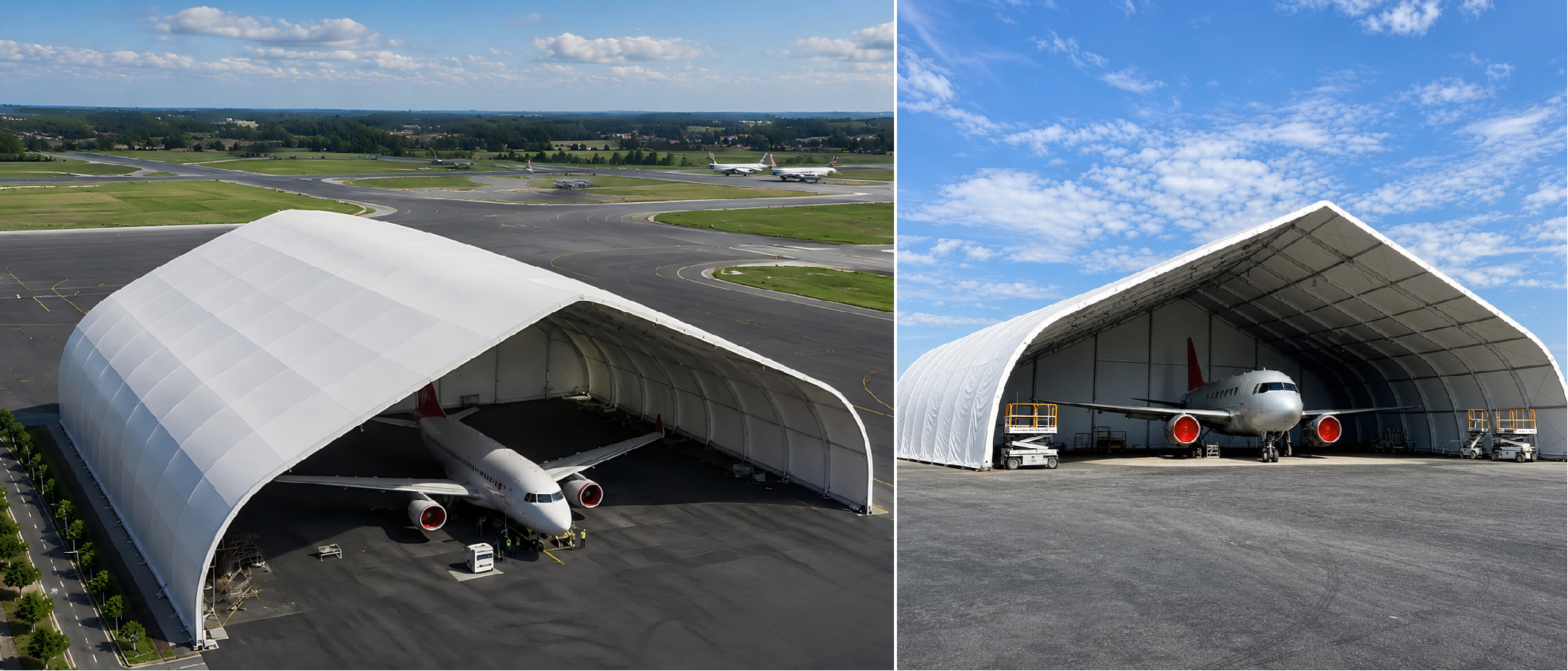
The membrane material used for hangar tents consists of a polyester base fabric coated on both sides with PVC. The high-strength base fabric bears the tensile load, while the PVC coating provides waterproofing, UV resistance, and self-cleaning properties.
Wind and Snow Load Resistance
A common misconception is that the membrane material itself must withstand the full force of wind and snow. In reality, the membrane serves to distribute these loads evenly across the aluminum alloy framework. For each hangar tent project, structural calculations are performed based on the specific wind and snow pressure parameters of the site. Standard designs can withstand gale-force winds (Beaufort scale 10–12). In northern regions prone to heavy snowfall, the roof pitch is optimized to facilitate snow shedding, and the cross-sections of the framework are reinforced. In areas frequently affected by typhoons, additional diagonal bracing and an enhanced anchoring system can be incorporated to improve overall structural stability.
Flame Retardancy
Because aircraft hangars house aircraft, aviation fuel, and maintenance components—all of which necessitate strict fire safety standards—B1-rated flame-retardant PVC membranes are the preferred choice. These materials are difficult to ignite, self-extinguish once the fire source is removed, and produce minimal smoke. B2-rated (combustible) membranes, typically used for standard exhibition tents, are not recommended for hangar applications.
Important Note: The flame retardancy of the membrane material is only one component; it does not guarantee that the entire hangar will pass fire safety inspections. A complete project must also include designated fire access routes, alarm systems, and fire compartments. When procuring such structures, you may request third-party test reports for the materials from the manufacturer.
Other Practical Features
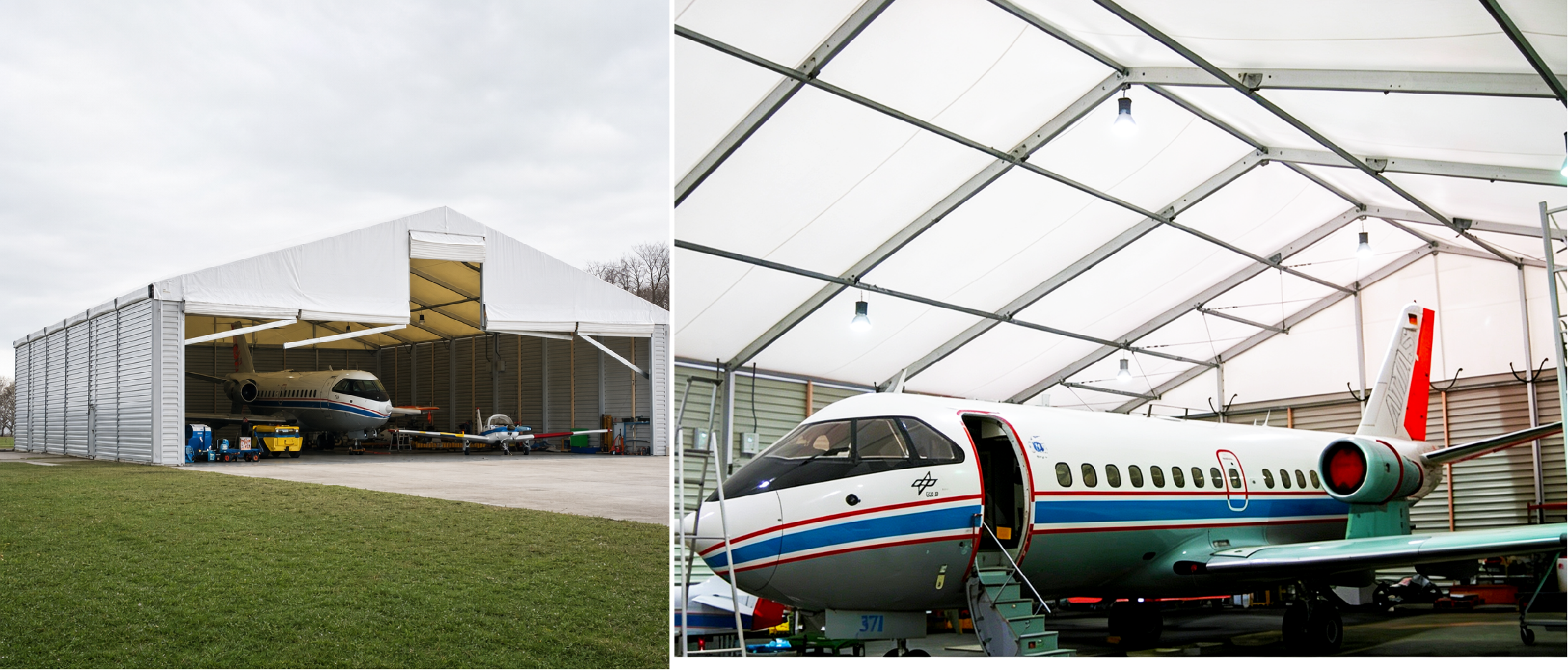
The seams of the membrane are joined using a high-frequency heat-welding process, ensuring a strong seal that prevents water leakage. The smooth surface allows rainwater to wash away dust, reducing the need for manual maintenance. For cold climates, a double-layer membrane configuration with integrated thermal insulation (insulation cotton) can be used to create a climate-controlled hangar, suitable for aircraft maintenance operations during the winter.
Factors Affecting the Actual Service Life of Hangar Tents
Site climate: Salt spray, intense ultraviolet (UV) radiation, and persistent snow accumulation can all accelerate the aging of membrane materials. Membrane selection: There is a significant difference in service life between standard membranes and UV-resistant, thickened industrial-grade membranes. Construction and installation: Uneven tensioning of the membrane surface or inadequate anchoring can lead to localized stress concentrations, resulting in premature damage. Routine operation and maintenance: This includes regularly clearing snow from the roof, inspecting fasteners, and ensuring the membrane surface is protected from scratches by sharp objects.